Reading the Weather Map Before You Buy: How Climate Risk Is Quietly Redrawing Indiana's Housing Market
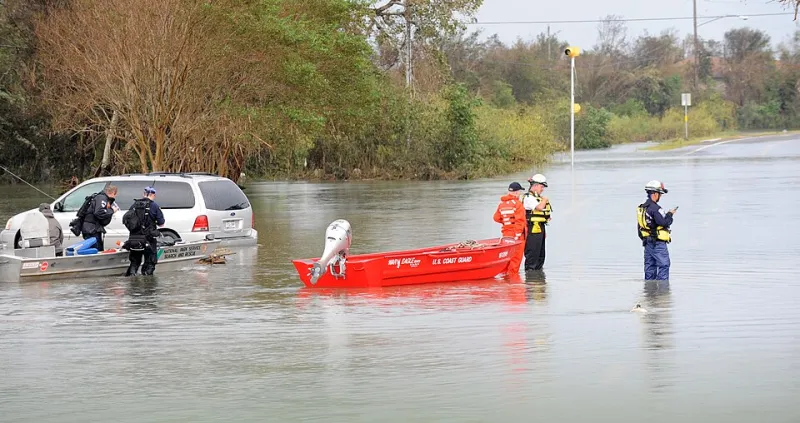
Photo: Jocelyn Augustino, Public domain, via Wikimedia Commons
Indiana doesn't get the same climate-disaster headlines as Florida or California. No wildfires, no hurricanes. But anyone who's lived here for more than a few years knows this state has its own weather story — and it's getting more complicated. Flooding along the Wabash and White River corridors. Tornado outbreaks that have surprised communities that never thought they were in the path. Ice storms that knock out power for days. And increasingly volatile spring weather that makes "100-year flood" feel like an outdated concept.
For homebuyers, these aren't just abstract risks. They translate into real dollars: higher insurance premiums, restricted mortgage availability in flood zones, resale value uncertainty, and in some cases, properties that simply become harder to sell over time. Here's a practical, region-by-region look at what's actually happening — and what smart buyers should be thinking about.
The Flood Zone Reality in Southern and Central Indiana
Let's start with flooding, because it's the most financially consequential climate risk for Indiana homebuyers.
The southern tier of the state — communities along the Ohio River including Evansville, Jeffersonville, and Madison — has long dealt with flood risk. FEMA flood maps designate significant portions of these areas as Special Flood Hazard Areas (SFHAs), which means federally backed mortgages require flood insurance. That insurance, through the National Flood Insurance Program (NFIP), has gotten considerably more expensive since FEMA rolled out its Risk Rating 2.0 methodology in 2021.
In some southern Indiana flood zones, annual flood insurance premiums have jumped from $600–$900 to $2,000–$4,500 or more, depending on the property's elevation and risk profile. That's a carrying cost that buyers need to factor in before falling in love with a riverside Victorian in Madison or a bungalow near the Pigeon Creek corridor in Evansville.
Central Indiana isn't immune. The White River and Fall Creek flood plains touch neighborhoods in Indianapolis that buyers sometimes don't realize are in designated risk zones. Irvington-adjacent properties, parts of Broad Ripple, and some older Southside neighborhoods have seen flood insurance requirements surprise buyers at closing. Always — always — pull the flood zone designation on any Indiana property before you make an offer.
The Tornado Belt: Risk Without the Headlines
Indiana sits in the southern edge of what climatologists sometimes call the "Dixie Alley" tornado corridor, an extension of the more famous Tornado Alley that's been shifting eastward in recent decades. Southern Indiana communities — Bedford, Bloomington, Columbus, and the area around Terre Haute — have seen notable tornado events in recent years, and meteorologists suggest the frequency of significant outbreaks in this region is trending upward.
For homebuyers, this raises questions that don't always get asked during a showing: Does this home have a basement or storm shelter? When was the roof last replaced, and what's its wind-resistance rating? What does the homeowner's insurance look like, and does it include wind and hail coverage at a reasonable premium?
In parts of southern Indiana, wind and hail riders on homeowner's policies have increased 20–40% over the past three years, according to insurance agents operating in those markets. Some carriers have quietly pulled back from writing new policies in higher-risk zip codes, leaving buyers with fewer options and higher prices.
Homes with reinforced construction, impact-resistant roofing, and below-grade storm shelters are commanding a quiet premium in tornado-prone areas — particularly among buyers who've relocated from other states and done their homework on regional weather patterns.
Where the Climate-Resilient Buyers Are Heading
Not all of Indiana carries equal risk, and some areas are benefiting from the flight away from high-risk zones.
The northern tier of the state — Fort Wayne, Elkhart County, and the South Bend area — generally sits above the major river flood plains and experiences fewer tornado events than the southern half. Insurance costs in these markets have risen more modestly, and some buyers are explicitly citing lower climate risk as part of their rationale for looking north.
Fort Wayne is an interesting case study. The city has invested heavily in flood mitigation infrastructure along the St. Marys, St. Joseph, and Maumee rivers — a multi-decade project that has dramatically reduced flood risk in areas that used to experience regular inundation. That infrastructure investment is showing up in property values and buyer confidence in ways that are measurable.
Hamilton County suburbs north of Indianapolis — Carmel, Fishers, Westfield, Noblesville — sit on higher ground with generally lower flood risk than Indianapolis proper, and their newer construction stock tends to include better storm-resilient features. These communities have also attracted buyers partly for reasons that have nothing to do with climate, but the weather risk calculus quietly reinforces their desirability.
What to Look for in a Climate-Resilient Indiana Home
Regardless of where in Indiana you're searching, there are specific features worth prioritizing if weather risk is on your radar:
Elevation matters more than you think. Even within a single neighborhood, a home that sits two feet higher than its neighbors can mean the difference between a FEMA flood zone designation and a standard homeowner's policy.
Roof age and rating. Indiana hail storms are frequent and damaging. A newer roof with impact-resistant shingles (look for Class 4 ratings) can lower your insurance premium and give you confidence heading into storm season.
Sump pump and backup power. Homes with battery backup or water-powered sump pump backup systems are significantly better positioned for Indiana's heavy spring rain events.
Basement waterproofing. If you're buying an older Indiana home with a basement — and most of them have one — the waterproofing situation is worth a detailed inspection.
Community infrastructure. Look at the broader neighborhood: Does the street drain well? Are there detention ponds nearby? Has the municipality invested in stormwater management?
The Insurance Conversation You Need to Have Before Closing
Here's a step that too many Indiana buyers skip: get insurance quotes before you go under contract, not after. In some higher-risk areas, the insurance quote will meaningfully change your monthly payment calculation. In a small number of cases, you may find that coverage is limited or expensive enough to change your decision about the property entirely.
This is especially true for older homes in flood-adjacent areas, properties with older roofs, and homes in communities where insurers have been quietly non-renewing policies.
The Bigger Picture
Climate risk isn't making Indiana a bad place to buy a home — it's making informed buying more important than ever. The communities and properties that will hold their value best over the next decade are the ones that either carry lower inherent risk or have invested in resilience features that mitigate it. Knowing the difference between those properties and the ones that look great on paper but carry hidden weather-related costs? That's the edge that today's smartest Indiana buyers are building into their search from day one.