Before You Buy That Bargain: The Real Math Behind Indiana Fixer-Uppers
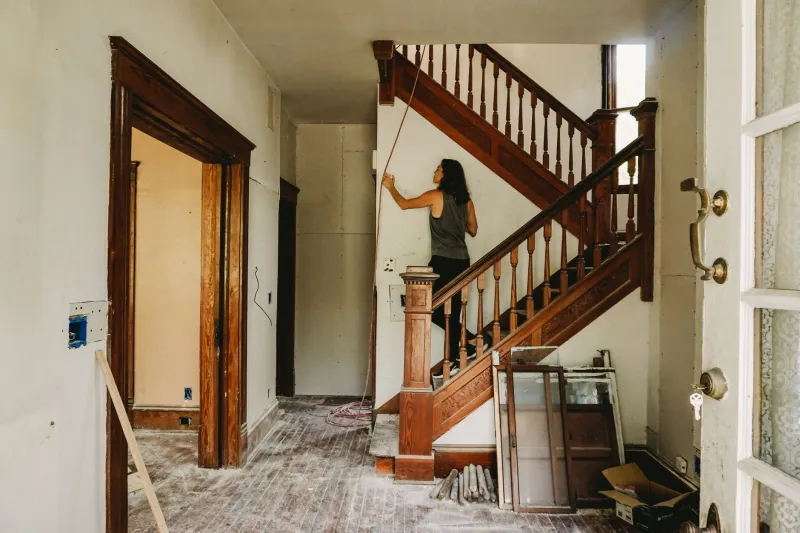
There's something genuinely exciting about stumbling across a listing in Anderson or South Bend priced at $75,000. It's got good bones, a decent lot, and a price tag that makes your heart race a little. But here's the thing — "good bones" is one of the most dangerous phrases in real estate. Bones need flesh, and flesh costs money. A lot of it, sometimes.
If you're seriously considering a fixer-upper in Indiana, you don't need more enthusiasm. You need a spreadsheet and a reality check. Let's walk through both.
Why Indiana Has So Many Fixer-Uppers (And Why That's a Double-Edged Sword)
Indiana's older industrial cities — think Muncie, Anderson, Gary, Richmond, and parts of South Bend — have housing stock that dates back to the early and mid-20th century. That means character, craftsman detailing, and big front porches. It also means knob-and-tube wiring, galvanized plumbing, crumbling foundations, and asbestos lurking in floor tiles.
The sheer volume of distressed properties in these markets keeps purchase prices low, which attracts buyers who are convinced they're getting ahead of the curve. Sometimes they are. Often, though, they underestimate what it actually takes to bring a 1940s bungalow up to livable — let alone lendable — standards.
So before you fall in love with a listing, let's talk numbers.
Step One: Establish Your After-Repair Value (ARV)
This is the single most important calculation in the fixer-upper equation. Your ARV is what the home will be worth after all the renovations are complete. You figure this out by looking at comparable homes — similar size, similar neighborhood, similar finishes — that have sold recently in move-in-ready condition.
Let's say you're eyeing a 3-bedroom, 1-bath home in Muncie listed at $68,000. After some research, you find that updated homes of the same size in that neighborhood are selling for around $130,000. That's your ARV target.
Now apply what investors call the 70% rule: you generally shouldn't pay more than 70% of the ARV minus your estimated renovation costs. In this case:
- ARV: $130,000
- 70% of ARV: $91,000
- Estimated renovation budget: $45,000
- Maximum smart purchase price: $46,000
At $68,000, this deal may already be underwater before you swing a hammer.
Step Two: Build a Realistic Renovation Budget (Not a Wishful One)
This is where most buyers blow it. They walk through a house, spot peeling paint and dated cabinets, and think, "Oh, maybe $20,000 to fix this up." Then they discover the roof is shot, the HVAC is dead, and the basement has been slowly flooding for a decade.
Here's a rough cost framework using Indiana contractor pricing as of 2025:
- Roof replacement (average home): $8,000–$14,000
- HVAC system (full replacement): $6,000–$12,000
- Electrical panel upgrade + rewiring: $4,000–$15,000
- Plumbing overhaul: $5,000–$20,000
- Foundation repair (varies wildly): $3,000–$30,000+
- Kitchen remodel (mid-range): $15,000–$35,000
- Bathroom remodel: $8,000–$18,000
- New windows (whole house): $8,000–$20,000
Add those up in a worst-case scenario and you're well past $100,000 on a house that was supposed to be a steal. The key is getting a licensed home inspector and a general contractor to walk the property before you make an offer — not after.
Step Three: Know Your Local Contractor Situation
Here's something Indiana-specific that a lot of out-of-state investors learn the hard way: contractor availability varies dramatically by region, and it directly affects your timeline and budget.
In Indianapolis and its suburbs, you'll find a relatively competitive contractor market. More options usually mean better pricing and faster turnaround. But in smaller markets like Anderson or Muncie, skilled tradespeople can be harder to book, and demand often outpaces supply. That means longer wait times, higher labor rates, and more risk of your project dragging into months you hadn't planned for.
South Bend sits somewhere in the middle — it has a more active renovation economy partly due to University of Notre Dame's influence and ongoing neighborhood revitalization efforts, but good contractors still book out fast.
The bottom line: factor in not just what the work costs, but how long it'll take to get done. Every month the house sits under renovation is a month you're paying a mortgage (or construction loan interest) without living in it.
Step Four: Factor in the Financing Friction
Fixer-uppers complicate your financing options. A conventional mortgage typically won't fund a home that's deemed uninhabitable — and a lot of these properties qualify as exactly that. Your options usually include:
- FHA 203(k) loans: These bundle the purchase price and renovation costs into one mortgage. Great in theory, but they come with strict guidelines, required contractors, and longer processing times.
- Fannie Mae HomeStyle loans: Similar concept, slightly more flexible on contractor choice.
- Hard money or bridge loans: Faster but expensive — interest rates can hit 10–14%, which eats into your margin fast.
- Cash purchases followed by a cash-out refinance: Common among experienced investors, but requires having liquid capital upfront.
Each financing path has its own cost implications. Make sure you're building interest, fees, and loan origination costs into your total budget.
Step Five: Be Honest About the Sweat Equity Math
People love the idea of doing work themselves to save money. And sure, if you're a skilled DIYer, you can knock out painting, flooring, landscaping, and some cosmetic work without hiring out. But be realistic.
Permitted work — electrical, plumbing, structural — generally requires licensed contractors in Indiana. Attempting to DIY those areas can void your insurance, create problems at resale, and potentially create safety hazards. Know which tasks you can genuinely handle and which ones need a pro.
Also consider your time. If you're working a full-time job and managing a renovation on weekends, a project that a full crew could finish in six weeks might take you eighteen months. That's eighteen months of holding costs, stress, and a house you can't fully live in.
The Bottom Line: When Does a Fixer-Upper Actually Make Sense in Indiana?
A fixer-upper in Indiana can absolutely be a smart move — under the right conditions. You want:
- A purchase price well below the ARV after renovation costs
- A clear, itemized renovation scope with contractor quotes in hand
- A financing plan that doesn't drain your reserves
- A realistic timeline that accounts for contractor availability in your specific market
- A neighborhood with genuine upward trajectory (check recent sales trends, not just your gut)
Markets like South Bend's Near Northwest Side, certain pockets of Muncie near Ball State University, or emerging blocks in Anderson near downtown revitalization efforts can offer real opportunity. But the deal has to pencil out on paper, not just feel good in your stomach.
Run the numbers. Talk to local contractors before you close. And if the math doesn't work, walk away — because in Indiana's current market, another opportunity is never far behind.