Why Indiana Renovation Budgets Blow Up — And How to Protect Yours
The math looked so clean on paper.
The house needed a kitchen update, some fresh paint, and maybe new flooring. You'd budgeted $32,000 — a number that felt responsible, even a little conservative. Eight months later, you're $68,000 in, the kitchen is still unfinished, and you just got a surprise bill for foundation waterproofing that nobody mentioned when you bought the place.
This is not a rare story in Indiana. It's practically a rite of passage.
We talked to contractors, renovation lenders, and buyers across the state to figure out exactly why home improvement projects spiral in Indiana's housing market — and what smarter buyers do to avoid the trap.
The "Good Bones" Problem
Real estate agents mean well when they describe a home as having "good bones." It's usually true — the structure is sound, the layout works, the neighborhood is solid. But the phrase has an unintended side effect: it gives buyers permission to underestimate everything else.
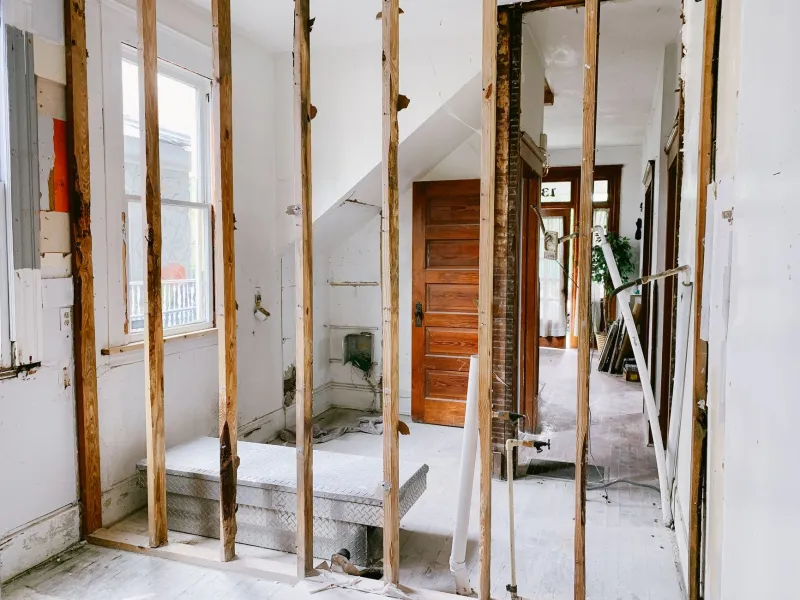
Older Indiana homes — and a significant portion of the state's housing stock was built before 1970 — are full of systems and materials that look fine until you open a wall. Knob-and-tube wiring hiding behind updated outlets. Cast iron drain lines that are 60% corroded. Asbestos-wrapped ductwork in a basement that looks totally benign. Subfloor rot under vinyl that's been covering it for two decades.
None of this shows up in a listing description. Some of it doesn't even show up in a standard inspection.
"The inspection tells you what's visible," said one Fort Wayne contractor who's been doing renovation work for over 20 years. "It doesn't tell you what's inside the walls. That's where the real surprises live."
The Permit Delay Multiplier
Indiana municipalities vary enormously in how they handle building permits — and that variance is a major driver of budget overruns.
In Indianapolis and larger cities, permit timelines have stretched significantly in recent years as construction activity has surged. A kitchen renovation that should take eight weeks can drag to five months when permit approvals take six weeks and inspections require multiple scheduling attempts. Every delay means carrying costs: mortgage payments, rent on your current place, storage fees, contractor mobilization charges.
Smaller Indiana cities have their own version of this problem. Some rural counties have limited inspection staff, which creates bottlenecks during busy construction seasons. Others have adopted stricter code requirements in recent years — particularly around electrical and energy efficiency — that add scope to projects that buyers assumed were straightforward.
One Bloomington contractor told us that permit-related delays added an average of $8,000–$12,000 in carrying and coordination costs to projects he'd seen go sideways in the last two years alone.
The Contractor Availability Gap
Indiana's construction labor market is tight. Skilled tradespeople — electricians, plumbers, HVAC technicians — are in high demand across the state, and that demand has fundamentally changed how renovation projects get sequenced and priced.
Here's the practical problem: renovation projects are interdependent. Electrical work has to happen before drywall. Plumbing rough-in happens before tile. If your electrician can't get back for two weeks, everything downstream waits.
Buyers who line up contractors before closing often find that those contractors' availability has shifted by the time they're ready to start. New quotes come in higher. The project gets re-sequenced. Scope creep sets in as the homeowner, frustrated by delays, decides to "add a few things while the walls are open anyway."
That last part — the open-wall temptation — is one of the most consistent budget killers contractors described. It's almost always a reasonable idea in the moment. It almost always costs more than expected.
Where Indiana's Housing Stock Creates Unique Surprises
A few issues come up specifically in Indiana properties that buyers from other states sometimes don't anticipate:
Crawlspace conditions. Indiana's climate — wet springs, humid summers, cold winters — is hard on crawlspaces. Vapor barrier failures, wood rot, and HVAC ductwork damage in crawlspaces are extremely common and often invisible until you're mid-renovation. Remediation runs $3,000–$15,000 depending on severity.
Lead paint. Homes built before 1978 contain lead paint, and Indiana has a significant inventory of pre-'78 housing. Renovation work that disturbs lead paint triggers federal RRP (Renovation, Repair, and Painting) regulations, which require certified contractors and specific containment procedures. That adds cost — sometimes significantly — to projects that buyers assumed were simple.
Aging septic systems in exurban markets. Buyers moving to Indiana's smaller towns and rural areas often underestimate the condition of septic systems. Replacement costs range from $8,000 for a basic system to $30,000+ for mound systems required on certain soil types.
Post-war construction quirks. Indiana has a large inventory of homes built in the 1950s and '60s using construction methods and materials that don't align with modern standards. Non-standard ceiling heights, unconventional framing, and materials that are no longer manufactured can turn a simple update into a custom fabrication project.
Building a Realistic Renovation Budget
Here's a framework that contractors and renovation lenders consistently recommend:
Start with a pre-purchase inspection plus a contractor walkthrough. Before you close, bring a contractor — not just an inspector — through the property. Pay for their time. Ask them to give you a rough scope and ballpark cost for the work you're planning. It's worth every dollar.
Add a 25–30% contingency. Not 10%. The standard advice is to add 10–15% for overruns. Indiana contractors and lenders told us that 25–30% is more realistic for older homes, especially if you're opening walls or touching mechanical systems.
Sequence the project before you budget it. Know what has to happen first (structural, electrical, plumbing) before you spend money on finishes. Buyers who work backward from the aesthetic often get blindsided by the infrastructure costs underneath.
Understand your financing before you start. Renovation loans — 203(k) loans, Fannie Mae HomeStyle loans, and home equity products — each have different rules about what they'll fund, when funds are released, and how draws work. Misunderstanding your financing structure is one of the fastest ways to run out of money mid-project.
Financing Options When Your Budget Isn't Enough
If you're already mid-project and over budget, you're not out of options — but they get more expensive the further you go:
- Home equity line of credit (HELOC): If you've built equity, this is often the most flexible option. Rates are variable, so watch your timing.
- Personal loans: Faster to access, but rates are higher. Best for smaller gaps.
- Cash-out refinance: Can work well if rates are favorable, but adds closing costs and resets your loan term.
- Contractor payment plans: Some larger Indiana contractors offer phased payment arrangements. It's worth asking.
The real lesson here isn't that renovation projects are always a disaster — plenty of Indiana buyers have transformed underpriced homes into serious equity. The lesson is that the buyers who come out ahead are the ones who planned for what they didn't know, not just what they did.
Good bones are worth something. But they're worth a lot more when you know what's attached to them.